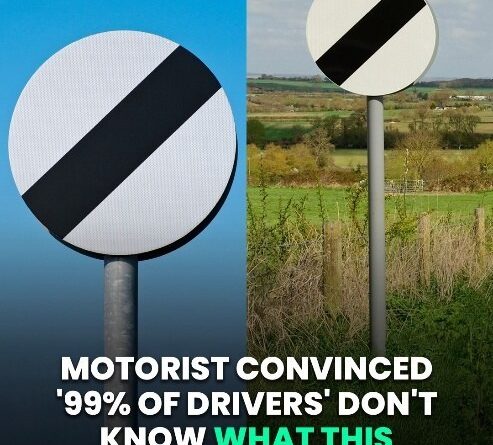
Driver Sparks Debate After Claiming ‘99% of Motorists’ Don’t Know What This Common Road Sign Means
A British driver recently ignited an online debate after insisting that “99% of motorists” don’t actually understand one of the UK’s most familiar — yet frequently misunderstood — road signs. The sign, a simple white circle with a bold black diagonal stripe, might seem straightforward, but its true meaning continues to puzzle drivers long after they’ve earned their licenses.
The symbol, officially called the national speed limit sign, is one of the most widely used on UK roads. Despite appearing in every driving theory test, it’s often misinterpreted. When the discussion hit Reddit, users flooded the comments with humorous guesses — from “national drifting zone” to “no limit from here.” Others confessed they never really knew what it meant, while some argued that its sudden appearance on rural roads encourages speeding or risky overtakes. The lively debate revealed a surprising gap between theory and real-world driving habits.
In reality, the black-and-white sign simply means that the national speed limit applies from that point onward. As the RAC explains, it overrides any previous speed restrictions, such as temporary limits or lower-speed zones. However, there isn’t just one universal number — the actual limit depends on both the road type and the vehicle being driven.
Here’s how it breaks down:
-
Cars and motorcycles: 60 mph on single carriageways, 70 mph on dual carriageways and motorways.
-
Vans and light goods vehicles: 50 mph on single carriageways, 60 mph on dual carriageways.
-
Vehicles towing trailers or caravans: follow the same reduced limits as vans.
-
Built-up areas (with street lights): 30 mph for all vehicles, unless otherwise indicated.
This tiered system means two vehicles on the same stretch of road may legally travel at different maximum speeds — a major reason for ongoing confusion.
Still, motoring experts stress that the national speed limit should never be seen as a target. Conditions such as heavy rain, fog, traffic, or poor visibility may require driving well below the posted maximum. Safety, they remind drivers, always comes before speed.
The widespread uncertainty over this simple sign underscores a bigger issue: driver education doesn’t end after passing the test. Over time, knowledge fades and habits form. Many campaigners believe regular refresher courses or online updates could help bridge these gaps.
In the end, the national speed limit sign isn’t an invitation to push the pedal to the floor — it’s a reminder to drive with awareness and judgment. While it may not mark a “national drifting zone,” as the internet jokes, it stands for something far more crucial: responsibility and respect on the road.