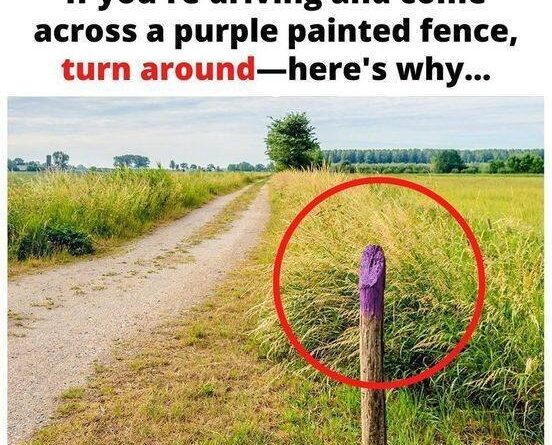
If You Spot a Purple Fence, Here’s the Hidden Message Behind It
When exploring the great outdoors, we often stumble upon curious sights — from weathered barns to curious landmarks that spark wonder. One such eye-catching discovery is a fence or tree painted a vivid shade of purple. At first glance, it might seem like a quirky design choice or a bold splash of color meant to make the property stand out. But in truth, that striking hue carries a far deeper meaning — one rooted in law and respect for private property.
A purple fence isn’t simply decorative. In many U.S. states, a streak or mark of purple paint on a fence post, tree, or gate is a legal warning. Known as the “Purple Paint Law,” this color serves the same purpose as a “No Trespassing” sign — it clearly signals that the land is private and off-limits. The law gives property owners a simple, durable, and unmistakable way to mark their boundaries without the need for physical signs that can fall, fade, or be removed.
The origins of this law are rooted in practicality. Traditional “No Trespassing” signs often disappear due to weather, vandalism, or theft. Replacing them can be both costly and time-consuming. Paint, on the other hand, is affordable, long-lasting, and nearly impossible to remove without effort. Once a purple stripe is applied, it can withstand years of wind, rain, and sun — silently but effectively delivering its message.
But why purple? Lawmakers needed a color that wouldn’t blend into the natural landscape yet wasn’t already used for other warnings. Purple was rare in nature and distinct enough to stand out in forests, fields, and along rural trails. Unlike red or orange, which are common in roadwork or hazard signs, purple became the perfect signal — unique, bold, and unmistakable in its intent.
In states where the Purple Paint Law applies, that simple streak of color carries real legal authority. Ignoring it can result in fines, charges, or even arrest for trespassing. Hunters, hikers, and explorers should always keep an eye out — a purple-marked post or fence line means the area is private, and entering without permission could have serious consequences.
However, not all states recognize the law. Each one that does has specific requirements: the paint must be a certain height from the ground, a specific width, and placed at consistent intervals. These details ensure that anyone passing by clearly understands the message being sent.
For landowners, purple paint offers a sense of security — a quiet but firm way to protect property, livestock, and family. For everyone else, it’s a clear reminder to honor boundaries. The color is more than a legal warning; it’s a social statement of privacy and respect.
So, if you’re wandering through the countryside and notice a flash of purple on a fence or tree, take a moment before moving forward. That color isn’t just there for style — it’s a mark of law, respect, and personal boundaries. In the end, those painted lines remind us of a simple truth: every space has its limits, and honoring them keeps both property and people safe.