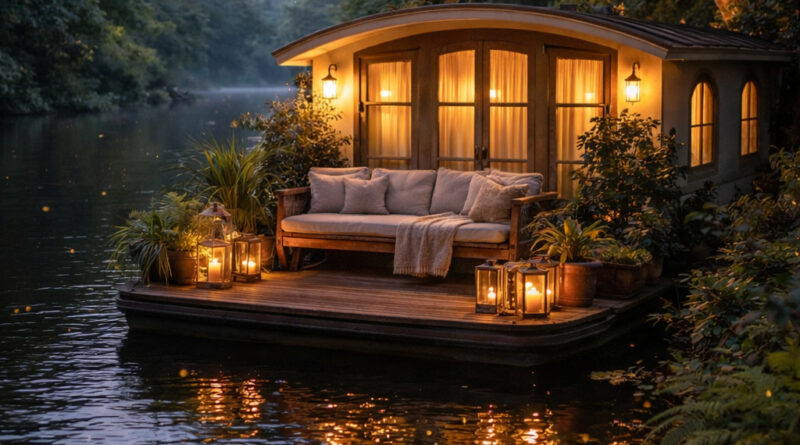
A Floating Sanctuary: Inside the Dreamiest Tiny Houseboat Retreat
There are tiny homes… and then there are escapes that feel almost unreal. This floating houseboat belongs firmly in the second category. Tucked beneath a canopy of mature trees and gently resting on calm water, it’s less of a home and more of a mood—one designed for slowing down, disconnecting, and living deliberately. But let’s be clear: what makes this work isn’t just the location. It’s the discipline in design. Every detail earns its place. The exterior hits hard visually because it commits. Warm lighting spills out through arched windows, bouncing off the water and instantly creating that “stop scrolling” effect you’re chasing. The deck isn’t cluttered—it’s curated. A soft, inviting sofa, layered plants, and lantern lighting create a scene that feels lived-in but controlled. No randomness. No noise. That’s why it works. Too many people ruin setups like this by over-decorating. This one doesn’t.
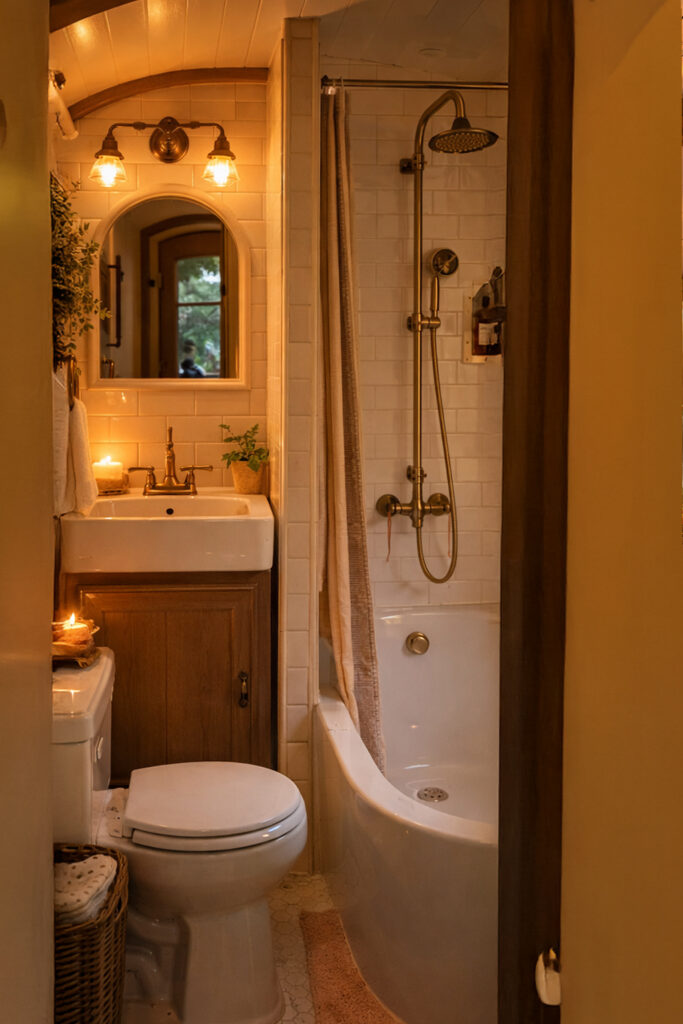
Let’s not romanticize this part—it’s cramped. But it’s also efficient, and that’s the difference between amateur and intentional design. The curved ceiling softens the space, preventing it from feeling like a box. The use of warm lighting instead of harsh white is doing heavy lifting here—it creates comfort where space can’t. The materials are simple: white tiles, wood cabinetry, brass fixtures. Nothing flashy, just consistent. And that’s the lesson: consistency beats luxury when space is limited. The shower-tub combo is a necessity, not a choice. But the execution keeps it from feeling cheap. Everything aligns visually, and that’s what tricks the eye into accepting the size.
The Living Space: Where This Design Wins
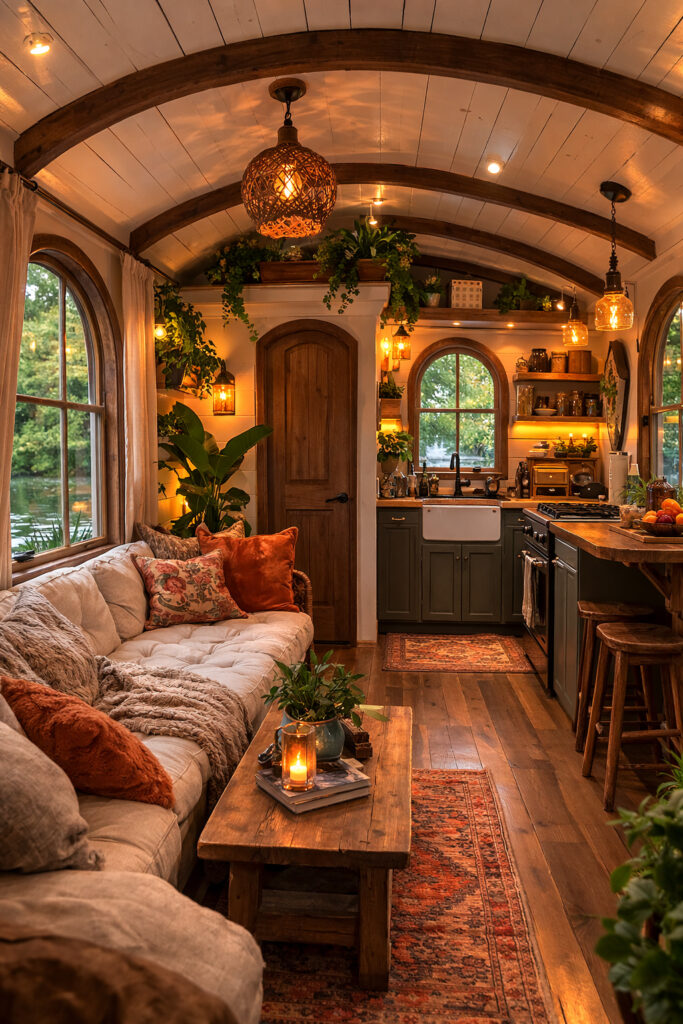
This is where most tiny homes fail—and where this one gets it right. The open-plan living room and kitchen don’t try to be minimal. They aim for warm density. That’s a big difference. Instead of stripping the space down, it layers textures: wood beams, soft textiles, greenery, warm lighting, and earthy tones. The ceiling design is doing more work than you think. Those exposed wooden beams create rhythm and guide the eye, making the space feel larger than it is. Without them, this room collapses visually. The kitchen is compact but grounded. Dark cabinetry anchors the space, while open shelving keeps it breathable. Again—balance. Not too clean, not too chaotic. And then there’s the lighting. If you copy anything from this entire setup, copy that. Multiple warm light sources at different heights create depth. One overhead light alone would destroy this atmosphere instantly.