If You Build Your Fence Backwards, You’re Doing It Wrong — Here’s Why
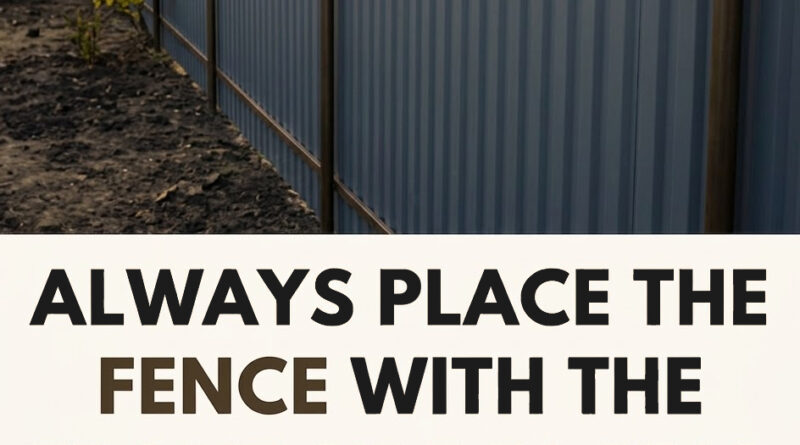
Most people think of fences in purely practical terms—marking boundaries, adding privacy, keeping pets in, and improving security. That’s fine, but if that’s all you’re thinking about, you’re missing a detail that actually matters: the finished side of the fence should face your neighbor, not you.
This isn’t some minor aesthetic choice. Get it wrong and you’re signaling that you don’t care about your surroundings—or the people living next to you.
It’s basic respect, not decoration
A fence already creates a physical divide. If you point the ugly side—posts and rails—toward your neighbor, you’re doubling down on that divide. It looks careless at best and disrespectful at worst.
Flipping the finished side outward does the opposite. It shows you’ve thought beyond your own yard. That small decision can prevent unnecessary tension and keep things civil. Ignore it, and don’t be surprised if your “simple fence” turns into a long-term neighbor issue.
You don’t get to ignore the rules
In a lot of places, this isn’t optional. Local codes and homeowner associations often require the finished side to face outward. Why? Because communities want consistency and fewer disputes.
If you ignore that and build it your way, you’re gambling. Worst case: complaints, fines, or being forced to rebuild the entire fence. That’s wasted money and time for something you could’ve done right from the start.
It directly affects how your property looks
People judge your home from the outside first. If the visible side of your fence looks clean and finished, your whole property benefits. It feels intentional and well-maintained.
Turn the structural side outward, and now your place looks half-done. Cheap. Neglected. If you ever plan to sell, that kind of detail chips away at perceived value fast.
This isn’t just a local thing
Across different countries and communities, the same expectation shows up: give your neighbor the better view. That consistency exists for a reason—it keeps shared spaces more pleasant and reduces friction.
Ignore that standard, and you’re not being “different.” You’re just being difficult.
If you want zero problems, do it right
Check local rules before building—don’t guess. Talk to your neighbor—don’t assume. If you really want to eliminate the issue entirely, use a double-sided design that looks the same on both sides.
And don’t forget maintenance. A fence that looked great on day one but falls apart later still reflects badly on you.
The bottom line
A fence isn’t just a barrier—it’s a statement about how you handle shared space. Face the finished side outward and you avoid conflict, stay compliant, and make your property look better. Ignore it, and you’re creating problems for no good reason.