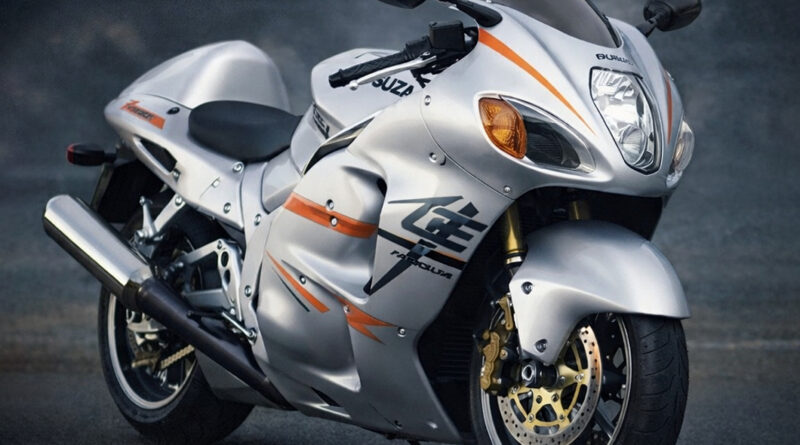
This motorcycle was almost illegal
Most riders remember the moment the Suzuki Hayabusa arrived—not because it looked radical, but because it rewrote what a production motorcycle could do. When Suzuki launched it in 1999, the industry wasn’t ready for what followed.
At the time, manufacturers were already chasing speed, but the Hayabusa took it further than anyone expected. With a top speed pushing past 300 km/h, it didn’t just become the fastest production motorcycle in the world—it created a problem. Not a mechanical one, but a political one.
Governments and safety regulators started paying attention. The idea that a street-legal machine could reach such extreme speeds raised concerns about public safety and regulation. Suddenly, motorcycles weren’t just about performance—they were becoming a topic of control.
The pressure grew quickly. There were fears that if things continued this way, strict laws or outright bans on high-performance motorcycles could follow. The Hayabusa hadn’t technically broken any rules, but it had pushed the limits so far that it forced everyone to react.
That’s when something unusual happened. Instead of waiting for governments to step in, major manufacturers—including Suzuki, Honda, Yamaha, and Kawasaki—made a quiet agreement among themselves. They would voluntarily limit the top speed of their motorcycles to 299 km/h (186 mph).
It was a turning point. Not because the bikes suddenly became slow, but because it showed how far things had gone. One motorcycle had effectively forced the entire industry to slow down.
The Hayabusa itself didn’t disappear. In fact, it became even more iconic. Riders respected it not just for its speed, but for what it represented—a moment when engineering ambition collided with real-world limits.
Over the years, newer models refined the formula, adding better handling, electronics, and control. But the legend remained the same. This was the motorcycle that went too far, too fast, and changed the rules for everyone else.
Today, the Hayabusa is still one of the most recognizable names in motorcycling. Not just because it was fast—but because it was so fast, it almost became a problem the world had to stop.
And that’s what makes it unforgettable.