This Tiny Hobbit-Style Home Gets One Thing Right That Most Houses Completely Fail At
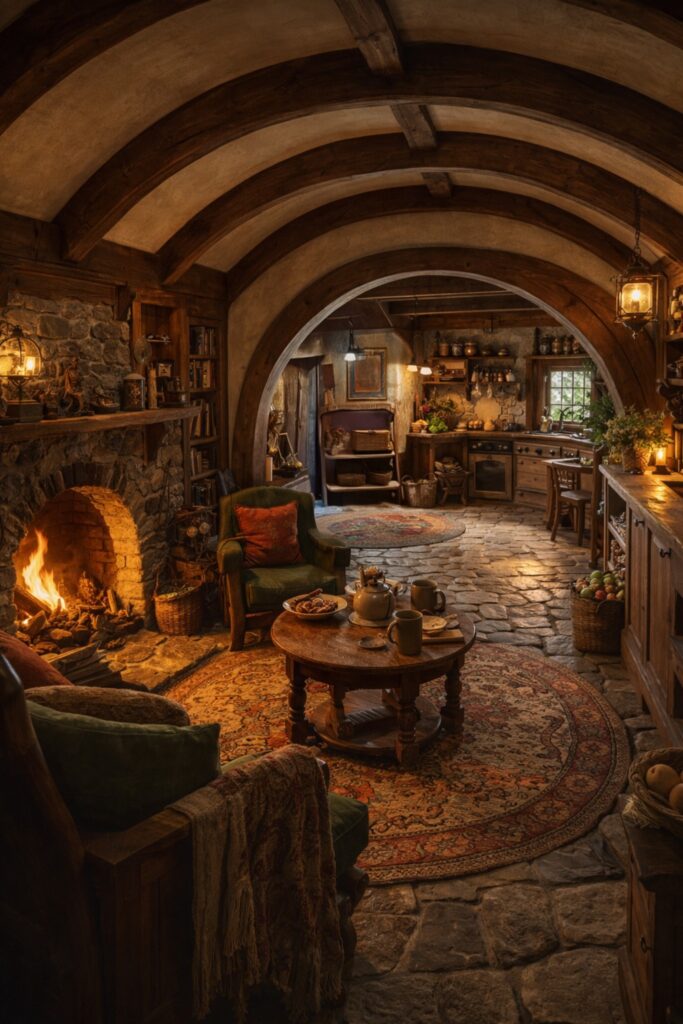
There’s a difference between a house and a feeling—and this one leans hard into the feeling. What you’re looking at isn’t just a small home. It’s a carefully built escape from everything modern homes usually get wrong. No wasted space, no cold surfaces, no sterile design pretending to be “minimal.” Every inch here is doing something—either function, warmth, or atmosphere. Most houses fail at all three. The living area immediately tells you what this place is about. Low, curved ceilings wrapped in heavy wooden beams create a sense of enclosure that modern architecture is too afraid to embrace. Instead of chasing height and emptiness, this space pulls you in. The stone fireplace isn’t just decoration—it’s the anchor of the entire room. Real fire, real texture, real presence. Pair that with layered rugs, worn wood, and soft lighting, and suddenly you have something most homes completely lack: gravity. A place you actually want to sit and stay. The kitchen doesn’t try to impress you with glossy finishes or oversized islands. It works. Compact, efficient, and built into the structure rather than slapped on top of it. Open shelves, natural materials, and warm tones make it feel like part of the home—not a showroom. That’s the mistake most designs make: they design kitchens to be looked at, not lived in.
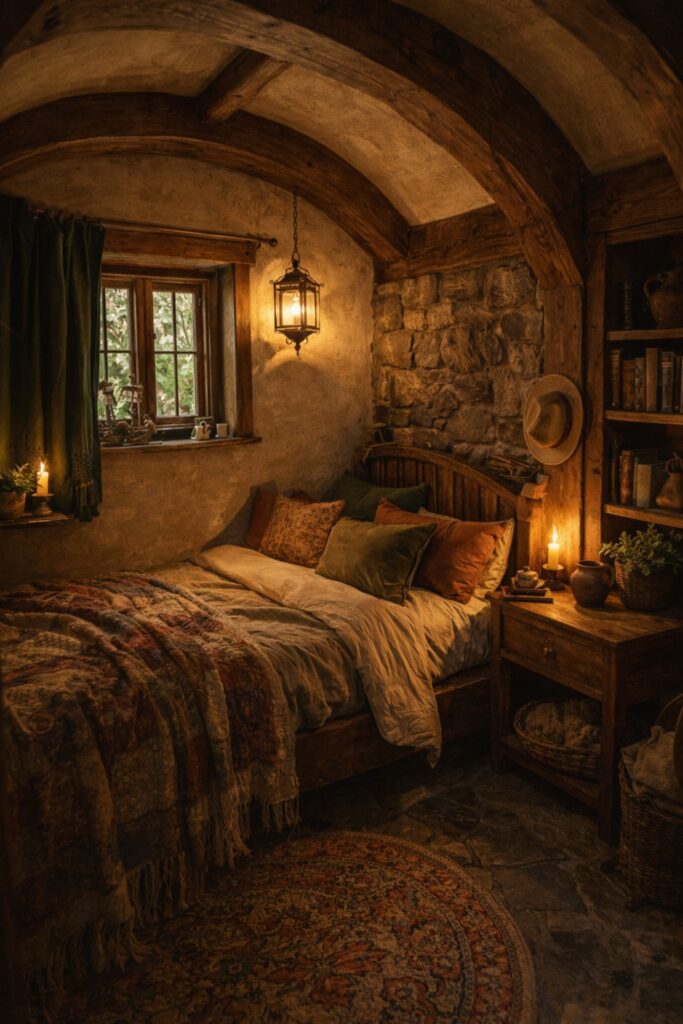
Then you move into the bedroom, and this is where the concept either holds or falls apart—and here, it holds. The scale is tight, intentionally so. The bed sits low, surrounded by stone and wood, with soft textiles breaking the hardness just enough. Lighting is dim, controlled, almost cinematic. This isn’t a room for scrolling your phone under bright LEDs. It’s built for shutting down. Most people don’t realize how badly their environment destroys their sleep—this one fixes that.
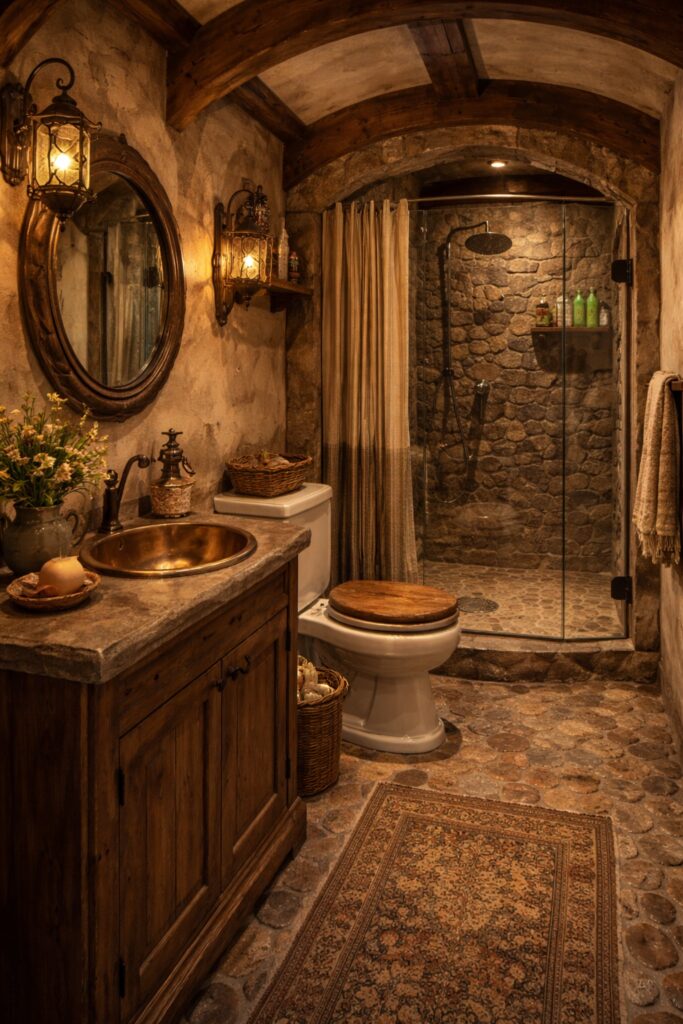
The bathroom continues the same discipline. No plastic, no visual noise. Stone, wood, copper—materials that age instead of degrade. The shower blends into the wall instead of being boxed out like an afterthought. Even here, in the most functional space, the design refuses to break character. That consistency is rare, and it’s exactly why this works.
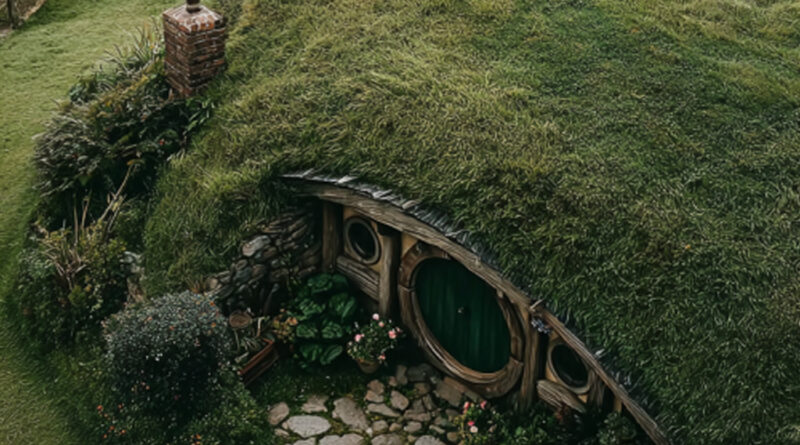
And then there’s the exterior, which is where this whole concept either becomes genius or gimmick. A grass-covered roof, embedded into the landscape, almost disappearing into the surroundings. From above, it doesn’t dominate—it blends. Most houses try to stand out. This one survives by fitting in. That’s a completely different philosophy, and frankly, a smarter one.
But here’s the truth most people won’t say: this kind of home only works if you commit fully. Half-measures kill it. You can’t take this style and mix it with modern clutter, random furniture, or cheap materials. It’ll look like a themed Airbnb instead of a real home. The success of this design comes from discipline—every element supports the same story.
So if you’re thinking of replicating something like this, don’t just copy the visuals. Copy the mindset. Strip out everything unnecessary, choose materials that actually age well, and design for how you want to feel—not how you want it to look in a photo.
Otherwise, you’re just building another forgettable house.