This Forest Stone Retreat Redefines What a Home Should Feel Like
This is what happens when design stops playing safe and actually commits to an idea.
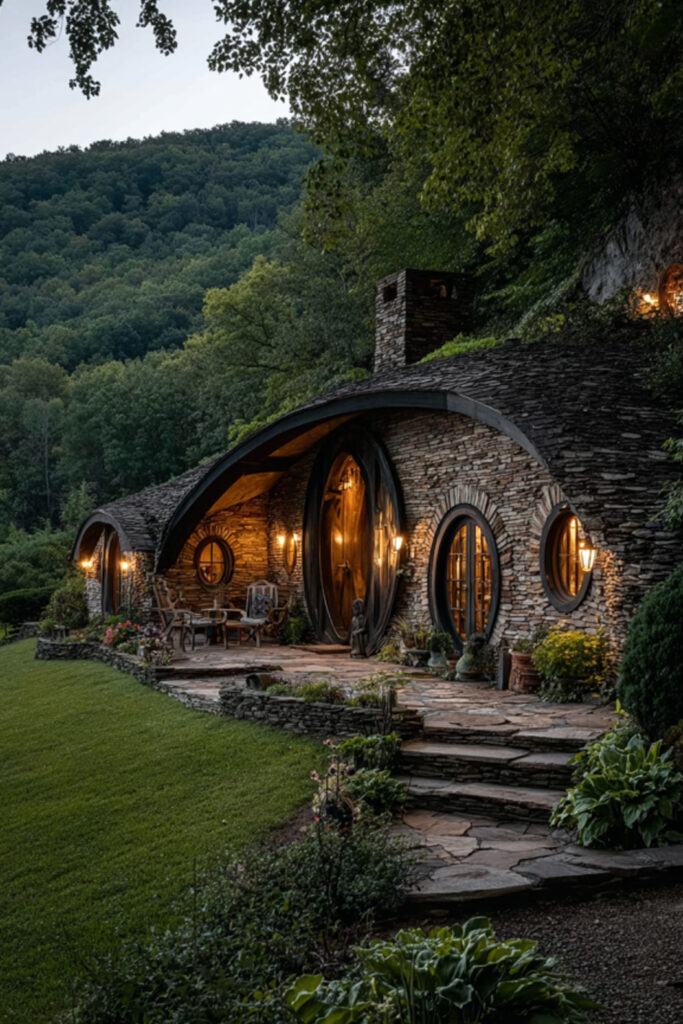
Hidden deep within a lush, forested hillside, this stone-crafted retreat feels less like a house and more like something grown out of the land itself. The architecture doesn’t try to dominate nature—it bends with it, curves into it, and disappears inside it. That sweeping arched roofline isn’t just aesthetic flair; it’s a statement. Most homes are boxes because it’s easy. This one refuses that laziness.
From the outside, the structure immediately sets the tone. Hand-laid stone, rounded doorways, and organic forms give it a timeless, almost storybook presence. But here’s the key difference: this isn’t some gimmicky “fantasy” build. The materials are real, grounded, and heavy. The craftsmanship carries the entire concept, and that’s why it works. Without that level of execution, this design would collapse into cliché fast.
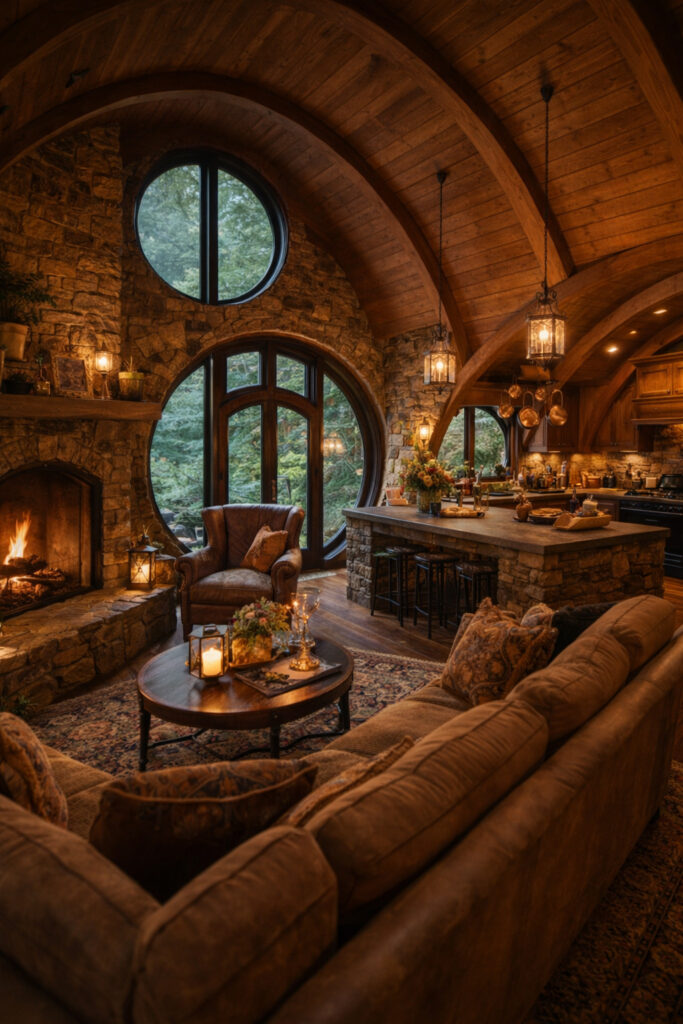
Step inside, and the interior doubles down on the same philosophy. Warm wood arches stretch across the ceiling, creating a continuous flow that mirrors the exterior curves. This is where most designs fail—they look good outside but fall apart inside. Not here. The transition is seamless. The living area is intimate but not cramped, anchored by a stone fireplace that feels like the heart of the home rather than just another feature added for looks.
The kitchen doesn’t try to compete—it integrates. Positioned as part of the same open space, it respects the architecture instead of interrupting it. Natural materials dominate again: wood, stone, and warm lighting working together to create a cohesive atmosphere. There’s no unnecessary modern clutter, no cold finishes breaking the mood. Everything is intentional, and that restraint is what gives the space its strength.
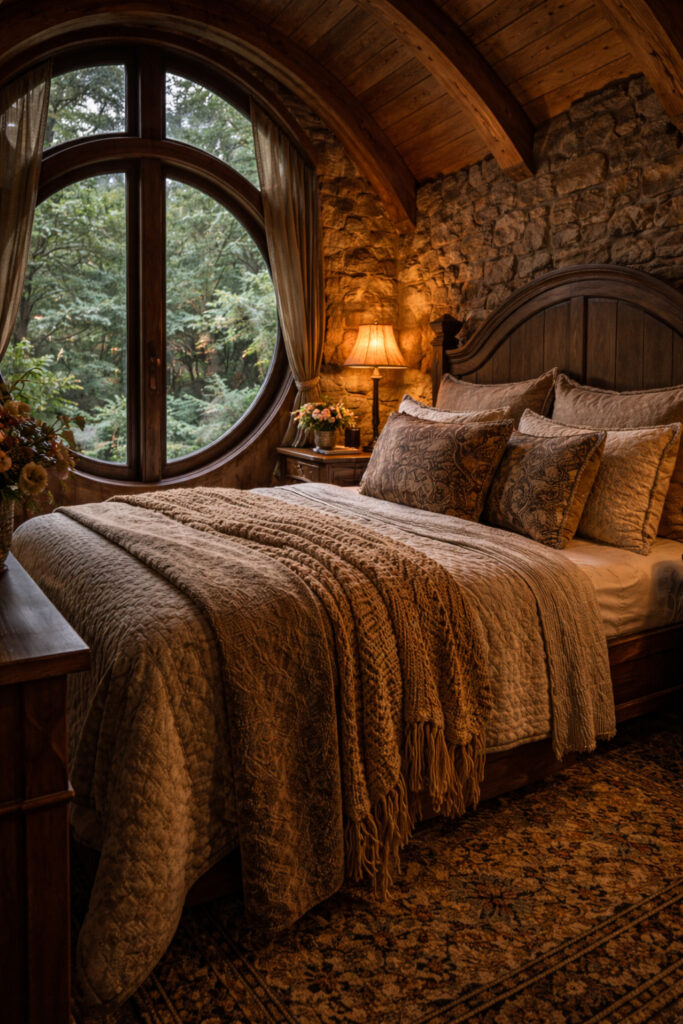
The bedroom continues the same language but shifts the energy. Large circular windows frame the surrounding forest like living artwork, pulling the outside in without sacrificing privacy. The textures soften, the lighting drops, and the space becomes more personal, more grounded. It’s not oversized or trying to impress—it’s designed to feel right, and that’s a harder thing to achieve.
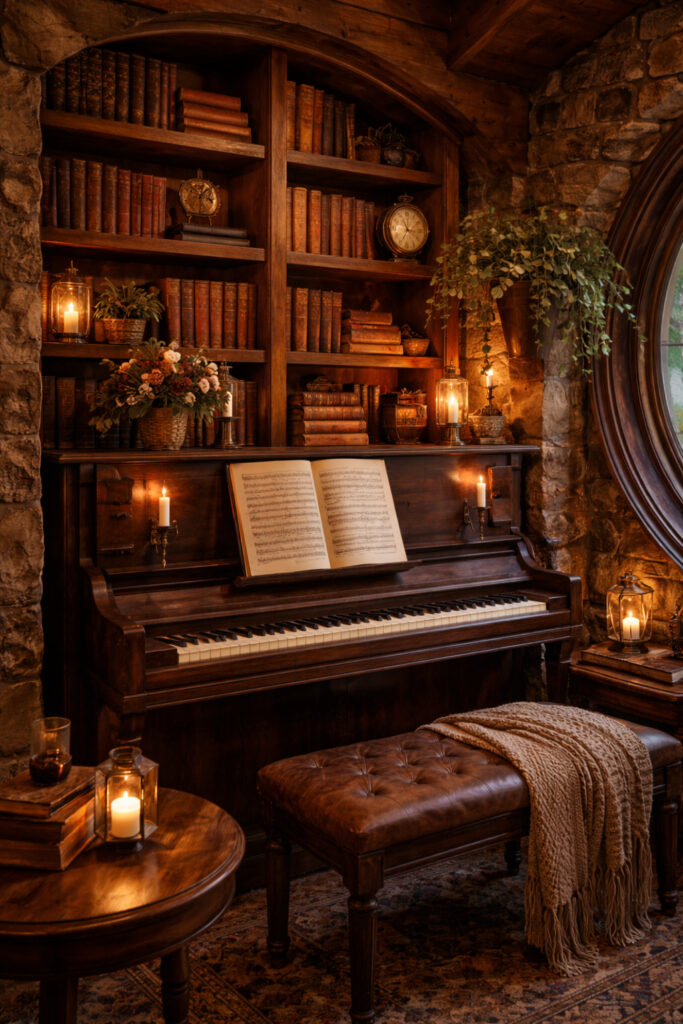
Even the smaller details, like the built-in shelving and reading nook, show a level of care most homes ignore. Instead of filling space, they shape it. The piano corner, surrounded by books and warm light, isn’t just decoration—it’s a signal of how the house is meant to be lived in: slow, intentional, and connected.
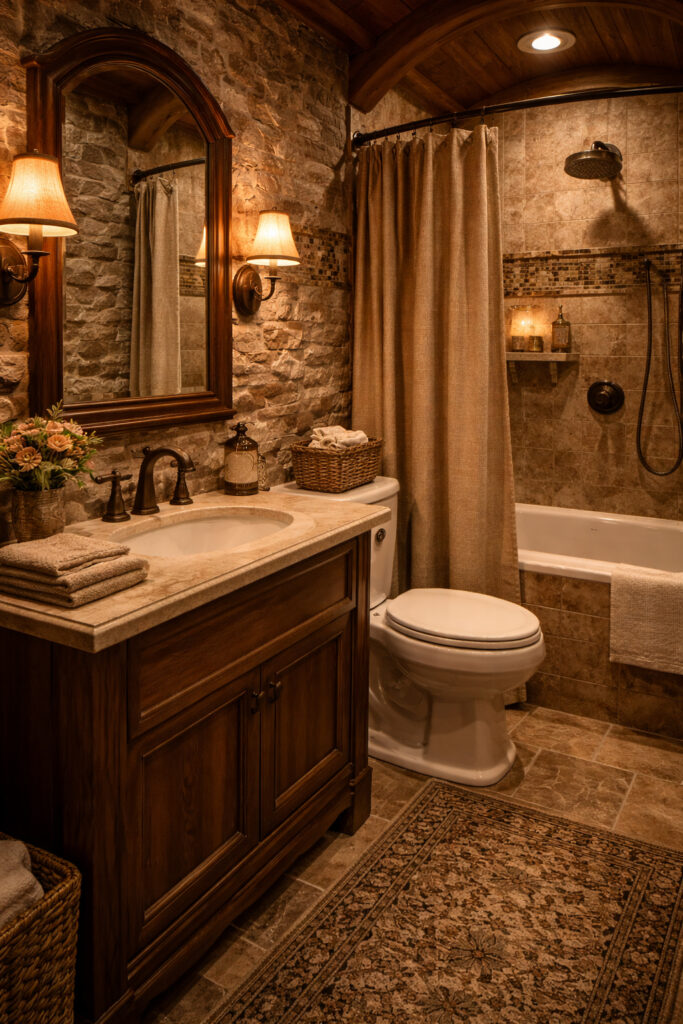
The bathroom follows through without breaking character. Stone walls, warm tones, and classic fixtures keep everything aligned with the rest of the house. No sudden design shift, no sterile modern interruption. It’s consistent, and consistency is what separates a well-designed home from a confused one.
Here’s the reality: this kind of home isn’t easy to execute. It demands vision, discipline, and a refusal to cut corners. Most people will never build something like this because it’s simpler to copy trends than to commit to a concept from start to finish. But that’s exactly why this works. It’s not trying to please everyone—it’s built with conviction.
And that’s the difference between a house you scroll past and one you actually remember.